
Model and quantity
Include the full model, manufacturer P/N, revision and quantity.
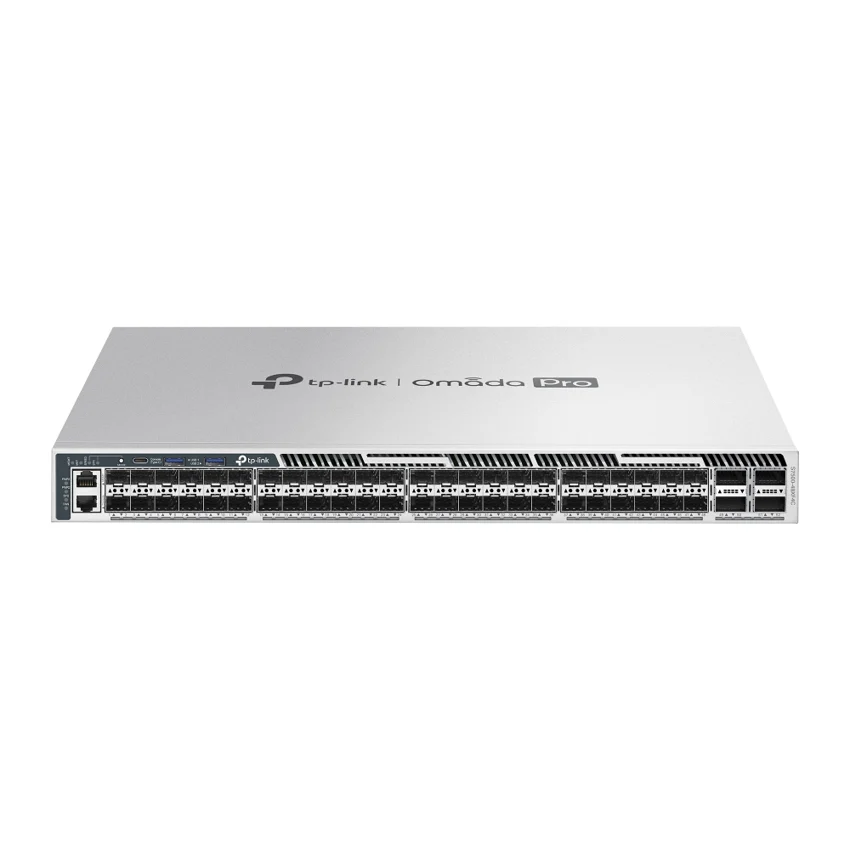
TP-Link / Ethernet Switch
Manufacturer P/N: S7500-48XF4C
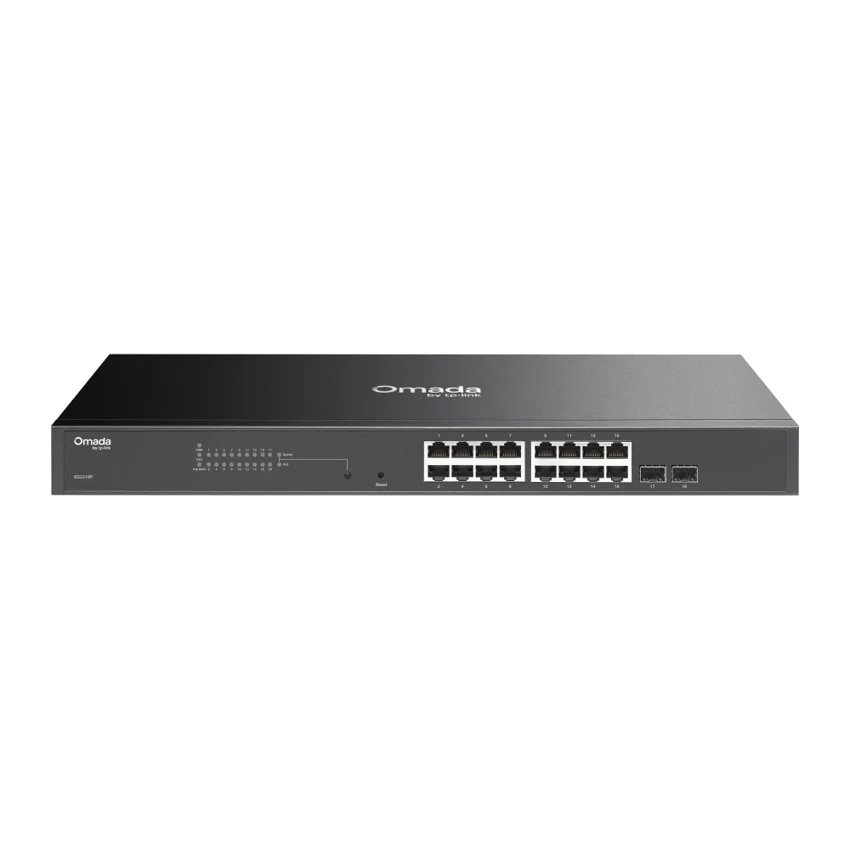
TP-Link S7500-48XF4C ethernet switch. Fan Quantity: Four Field-replaceable and Hot-swappable Fans; Dimensions ( W x D x H ): 17.3 × 15.0 × 1.7 in (440 × 380 × 44 mm); Mounting: Rackmountable. Compare configuration and request a hardware quote.
Price on request
Contact us to confirm availability. Final price, shipping and taxes are confirmed before payment.
Pricing, availability, condition, included options and warranty are confirmed in your quotation.
CONNECTIONS & COMPATIBILITY
Check the protocol and port requirements of the equipment you intend to connect. Ethernet, Fibre Channel, InfiniBand and carrier interfaces are not interchangeable.
Browse the product categories above for related equipment. Confirm compatibility with your full configuration before ordering.
Technical overview
Use the complete part number when reviewing options and system requirements.
| Manufacturer | TP-Link |
|---|---|
| Manufacturer part number | S7500-48XF4C |
| Product family | Business ethernet switchs |
| Documented hardware version | V1; match the hardware revision before ordering |
| Fan Quantity | Four Field-replaceable and Hot-swappable Fans |
| Dimensions ( W x D x H ) | 17.3 × 15.0 × 1.7 in (440 × 380 × 44 mm) |
| Mounting | Rackmountable |
| Max. Power Consumption | 105.7 W (110 V/60 Hz) 109.3 W (220 V/50 Hz) |
| Max Heat Dissipation | 360.7 BTU/hr (110 V/60 Hz) 372.9 BTU/hr (220 V/50 Hz) |
| Packet Buffer Memory | 10 MB |
| Jumbo Frame | 9 KB |
| Switching Capacity | 1760 Gbps per Unit |
| Packet Forwarding Rate | 600 Mpps |
| MAC Address Table | 128 K |
| Omada App | Yes, through Omada Pro Controller |
| Centralized Management | • Omada Pro Cloud-Based Controller • Omada Pro Hardware Controller • Omada Pro Software Controller |
| Cloud Access | Yes, through Omada Pro Controller |
| Zero-Touch Provisioning | Yes. Requiring the use of Omada Pro Cloud-Based Controller. |
| System Requirements | Microsoft® Windows® 98SE, NT, 2000, XP, Vista™ or Windows 7/8/10/11, MAC® OS, NetWare®, UNIX® or Linux. |
| Quality of Service | • Class of Service - 8 Queues of Priority - Port Priority - IEEE 802.1p Priority - DSCP Priority - Queue Min-Bandwidth - Schedule Mode (SP, WRR, SP+WRR) • Bandwidth Control - Rate Limit - Storm Control • Voice VLAN • User-Defined OUI • Smoother Performance • Action for Flows - QoS remark (802.1P Remark, DSCP Remark) |
| L3 Features | • L3 Interface: 256 (IPv4,IPv6) • Static Route: 2,048 IPv4, 1,024 IPv6 • Host Route Table: Max 22,528 entries • IPv4 Network Router entries: 40,960 (shared with IPv6 Network Router entries) • IPv6 Network Router entries: 40,960 (shared with IPv4 Network Router entries) • ECMP: 768 entries, max 32 ECMP Nexthops per Destination • Static ARP: 1,024 static entries • Dynamic ARP: 45,056 dynamic entries • ND: 45,056 • DHCP Server: Max 64 IP pool, Max 8,000 IP entries • DHCPv4/v6 Relay • VRRP: Version v2/v3, Max 64 instances, Max 32 Virtual IP per instance • OSPFv2 - OSPF Instance: 16 - Network Entries: 256 entries - Area Entries for Stub or NSSA: 16 per instance - Area Range Entries: 16 per instance - Virtual-link Entries: 16 per instance • OSPFv3 - Area Entries for Stub or NSSA: 16 per instance - Area Range Entries: 16 per instance • RIPv1/v2 - Network Entries: 256 - Redistribute Entries: 20 • RIPng • IS-IS - IS-IS Interfaces: 128 - IS-IS Area Numbers: 3 - Max Redistribute Configs: 10 - IS-IS IPV6 - IS-IS BFD • BGP: Max 20 redistribute configs • PIM-SM/PIM-DM/PIM-SSM - IP Multicast Route Entries: 1K - PIM Neighbors: 256 - Max PIM Interfaces: 128 • IGMP: Version v1/v2/v3, Max 2,048 multicast groups • BFD: 16 template numbers, 8 session numbers • PBR • uRPF |
| L2 and L2+ Features | • Link Aggregation • Spanning Tree Protocol • Port-based and VLAN-based Loopback Detection • 802.3x Flow Control • ERPS • Mirroring • RSPAN • MAC Address Table • Multicast - IGMP Snooping - MLD Snooping - Multicast VLAN Registration (MVR) - Max Multicast Table: 4K (IPv4, IPv6) - Fast Leave - Static Multicast Groups - Multicast Filtering - IGMP Snooping Authentication |
| Advanced Features | • Automatic Device Discovery ‡ • Batch Configuration ‡ • Batch Firmware Upgrading ‡ • Intelligent Network Monitoring ‡ • Abnormal Event Warnings ‡ • Unified Configuration ‡ • Reboot Schedule ‡ ISP Features : • 802.3ah Ethernet Link OAM • L2PT (Layer 2 Protocol Tunneling) • Device Link Detect Protocol (DLDP) • DDM • sFlow |
| VLAN | • Max 4K VLAN Group (802.1q VLAN) • 802.1Q Tagged VLAN • MAC VLAN Entries: 200 • Multicast VLAN • Management VLAN • VLAN VPN (QinQ): Max 256 entries • GVRP • Protocol VLAN: Protocol Template 16, Protocol VLAN 12 entries • Voice VLAN • Private VLAN |
| Security | • Port Isolation • CPU-Defend • ARP Inspection (Dynamic ARP Inspection) • DoS Defend • IP-MAC-Port Binding -1,024 Entries - DHCP Snooping - ARP Inspection - IPv4 Source Guard • IPv6-MAC-Port Binding -1,024 Entries - DHCPv6 Snooping - ND Detection - ND Snooping - IPv6 Source Guard • DHCP Filter • Static/Dynamic Port Security - Up to 64 MAC addresses per port • Broadcast/Multicast/Unknown-unicast Storm Control - kbps/ratio control mode • 802.1X - Port base authentication - Mac base authentication - VLAN Assignment - MAB - Guest VLAN - RADIUS authentication and accountability support • AAA (including TACACS+) • Secure web management through HTTPS with SSLv3/TLS 1.2 • Secure Command Line Interface (CLI) management with SSHv2 • IP/Port/MAC-based access control • Secure boot • RADSEC |
| Management Features | • Web-based GUI • Command Line Interface (CLI) through console port, telnet • SNMPv1/v2c/v3 - Trap/Inform - RMON (1, 2, 3, 9 groups) • SDM Template • DHCP/BOOTP Client • 802.1ab LLDP/LLDP-MED • DHCP Auto Install • Dual Image, Dual Configuration • CPU Monitoring • Password Recovery • SNTP • System Log |
| Environment | • Operating Temperature: -5 °C to 50 °C (23 °F to 122 °F) @ 300 meters -5 °C to 45 °C (23 °F to 113 °F) @ 2,000 meters -5 °C to 40 °C (23 °F to 104 °F) @ 3,000 meters • Storage Temperature: -40 °C to 70 ℃ (-40 ℉ to 158 ℉) • Operating Humidity: 10–90% RH non-condensing • Storage Humidity: 5–90% RH non-condensing |
PRODUCT DETAILS
TP-Link S7500-48XF4C is an ethernet switch in the Business ethernet switchs range. Use the model code when matching your deployment or replacement requirement.
Plan the access-port count, uplink media and aggregate PoE load together. Verify the exact power-supply configuration, stacking components and optics before confirming the order.
Confirm hardware revision and included items in the quotation. A firmware-dependent feature or licensed capability must be checked against the actual configuration.
Send S7500-48XF4C with quantity, destination, required condition and any installation constraints. List power, optics or mounting accessories separately when required.
Inclusions depend on the exact ordering configuration. We confirm the supplied hardware, accessories and applicable commercial terms in writing.
Browse TP-Link equipment · Network equipment · Request a matched quotation
Prepare your enquiry
Include the full model, manufacturer P/N, revision and quantity.
Tell us the host model, generation, installed configuration and required supporting hardware.
Specify condition, testing requirements, destination and requested delivery date.
RELATED PRODUCTS
Check compatibility before choosing a replacement. The products below are related, but may not be interchangeable.
Browse this equipment range
Access, aggregation and data-centre switching. Start with the required port speeds, then review uplinks, PoE, airflow and software options.